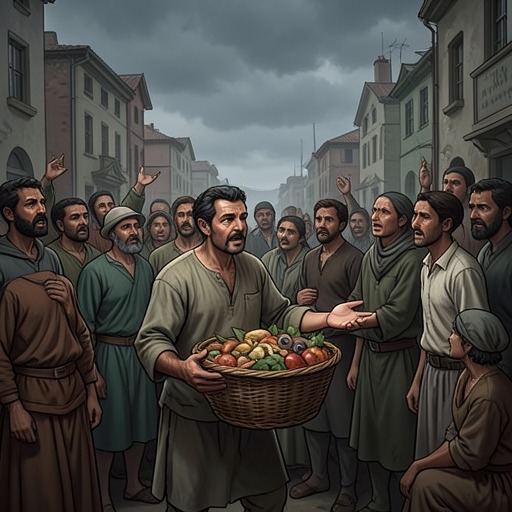
Grief and Mourning
Don't Leave God Alone: How to Get God's Attention, Remain in His Presence, and Even Change His Mind to Make a Difference in Your WorldGrief and Mourning is portrayed as a powerful response to Lazarus’s death, but also as an emotional state that can obstruct faith when it becomes prolonged despair. Mary’s stillness, Martha’s confrontation, the family’s shared offense, and the mourners’ tears show grief spreading through an entire community; the narrative then contrasts that sorrow with Jesus’ purpose and the possibility that what appears permanently dead may still become the setting for God’s glory.
The Wound of Lazarus’s Death
Mary and Martha were grieving because Lazarus had died after Jesus failed to arrive when they expected Him. Jesus was regarded as a friend of the family, which made His apparent absence more painful: they had believed He would come in response to their desperate message and prevent their brother’s death. Their grief therefore contained more than bereavement. It also carried the collapse of a cherished expectation—that Lazarus would remain part of their lives and that Jesus would rescue him in time.
Mary’s response was inward and immobilized. She remained seated in the house while the crisis unfolded, a physical image of sorrow that has withdrawn from movement. Martha, by contrast, brought the family’s pain into direct confrontation when she met Jesus. Their different gestures expressed the same wound: Mary grieved in stillness, while Martha gave the grief a voice.
Repetition, Offense, and Blame
Mary and Martha repeated the same accusation to Jesus: “Lord, if You had been here, my brother would not have died.” The repetition suggests that they had shared and rehearsed their feelings before Jesus arrived. Their grief had become inseparable from offense, because the person they trusted to help had seemed to ignore their urgent need.
Mary’s words also placed responsibility for Lazarus’s death on Jesus. Instead of continuing to believe that He would help keep their dream alive, she blamed Him for not coming earlier and used His absence to justify her own reaction. The account treats this movement from sorrow to accusation as a recurring danger: when desired outcomes fail, grief can seek a human cause and turn pain into an excuse.
Mourning as a Collective Force
The sorrow surrounding Lazarus was not limited to his sisters. Jesus saw Mary weeping, along with the Jews who had come with her, and the mourners’ grief became part of the atmosphere at the tomb. Their tears were connected to customary mourning practices, but the narrative distinguishes the outward expression of grief from a spiritually productive response.
Crying is acknowledged as permissible, yet remaining in despair is presented as destructive. If mourning continues without movement toward God’s purposes, it may become unbelief and expose people to what the text calls a spirit of grief. In that condition, an old loss can continue governing the future, keeping later dreams symbolically in the grave even after the original crisis has passed.
The Tomb, Tradition, and the Blocked Miracle
Grief narrowed Martha’s perception when Jesus ordered the stone removed. She could see only the physical consequence of Lazarus’s four days in the tomb: “By this time there is a stench.” Even as the stone was being moved, her attention remained fixed on decay and finality. The detail shows how mourning can make the negative interpretation of circumstances appear more credible than the promise of intervention.
The mourners likewise questioned Jesus’ power by recalling that He had opened blind eyes. Their reasoning implied that the One who had performed earlier miracles should have prevented Lazarus from dying, and therefore cast doubt on His ability to raise him. The account identifies this response with religion and tradition, which use familiar human explanations to reduce supernatural possibility to ordinary limits. Grief, blame, and inherited reasoning thus converge around the tomb, each reinforcing the impression that Lazarus’s death is irreversible.
Spiritual Significance and Possible Release
The narrative says that Jesus’ delay had a purpose: the situation would lead to God being glorified and would provoke a response. The sisters expected timely rescue, but Jesus allowed the crisis to reach the unmistakable condition of death. Their grief therefore became the setting for a test of whether faith would survive when the expected answer did not arrive on schedule.
Grief and Mourning carries a double significance in this framework. It honors the reality of loss and recognizes that Mary, Martha, and the surrounding mourners were genuinely wounded; at the same time, it warns that sorrow must not become a permanent governing power. The desired movement is away from despair, accusation, and tradition-bound unbelief, and toward emotional alignment with God’s purposes. Lazarus’s death makes the family’s dream appear finished, but the narrative insists that mourning need not have the final word over what God may still bring back to life.